
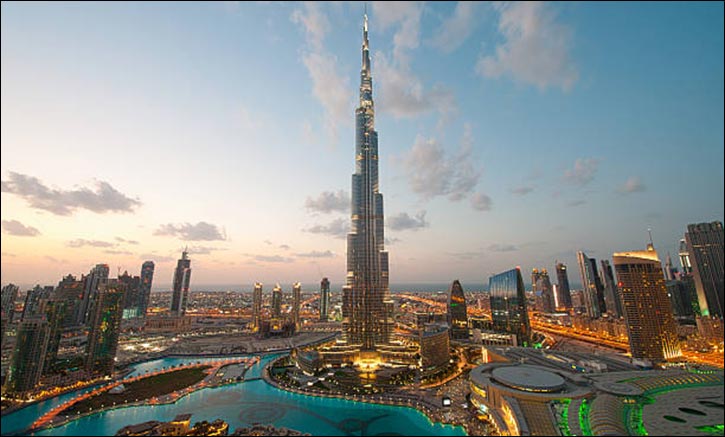
Dubai has always treated tourism as a living system rather than a fixed product. You could feel that philosophy clearly this year, with the city focusing more directly on how you move, decide, explore and share while you are there. Global leisure habits have shifted toward personalization, speed and digital immersion, while Dubai’s tourism strategy has followed suit. In the first half of 2025 alone, Dubai welcomed approximately 9.88 million international visitors (a 6% increase year-on-year), underscoring the destination’s continued momentum and its alignment with the Dubai Economic Agenda (D33).
With international arrivals surpassing pre-pandemic levels and long-term plans anchored in the D33, the visitor economy is being rebuilt around technology, data and experience. Tourism is increasingly treated as an interconnected system, where digital services, entertainment, mobility and hospitality reinforce one another rather than operating in isolation. What makes this moment different is that digital transformation is now a visible, everyday part of how the destination presents itself and how you experience it on the ground.
The modern visitor arrives with expectations influenced by apps, algorithms and always-on services, with Dubai adapting accordingly: digital visas, biometric immigration gates, AI-driven recommendation engines and mobile-first tourism platforms now guide much of your journey through the city. These systems quietly remove friction, allowing more time for experiences rather than logistics, in an evolution that mirrors broader global leisure behavior, where entertainment, gaming, travel planning and lifestyle choices increasingly overlap online.
For many travelers, digital leisure platforms now establish expectations long before a flight is booked, influencing how destinations are evaluated alongside other forms of online entertainment. Platforms that curate leisure activity digitally, including spaces such as lucky-one.org/ar/, illustrate how international audiences engage with entertainment before ever setting foot in a destination. Dubai’s tourism planners recognize this overlap and increasingly design campaigns, attractions and partnerships that meet travelers where their digital habits already live, rather than asking them to adapt after arrival.
The numbers behind Dubai’s tourism performance reinforce how well this strategy is working. By late 2025, the city welcomed well over 17 million overnight international visitors, with especially strong growth from Europe, South Asia and the GCC. Hotel occupancy rates remain high across luxury and mid-scale segments, while average daily rates continue to climb, signaling healthy demand rather than discount-driven volume. You also see longer stays, driven by remote work flexibility and extended business travel.
Major events, exhibitions and conventions are filling hotels during traditional off-peak periods, blurring the old seasonal patterns, as trends show a visitor economy that is both diversified and resilient. Spending patterns increasingly reflect experience-led consumption, where visitors prioritize curated activities, premium services and digitally facilitated leisure over purely transactional travel. Moreover, digital targeting, data-led marketing and smarter capacity management are helping Dubai attract travelers who spend more, stay longer and engage more deeply with the city’s offerings.
Travel today is less about ticking landmarks off a list and more about how an experience fits into your wider lifestyle. Dubai has responded by emphasizing immersive culture, wellness and participation rather than passive sightseeing. Here, museums blend storytelling with technology, heritage districts feel curated rather than preserved and wellness tourism has expanded into beaches, deserts and urban retreats. Sustainability also plays a stronger role in travel decisions, influencing transport choices, accommodation preferences and even dining.
You may notice how seamlessly leisure blends with work as well, as coworking spaces, business hotels and entertainment venues increasingly overlap. This mindset also reflects comfort with regulated online entertainment, where leisure time is fragmented across physical environments and digital platforms rather than confined to a single setting. Younger travelers, particularly, expect destinations to reflect their values while still offering excitement and comfort. Ultimately, Dubai’s ability to balance ambition, tradition and adaptability keeps it aligned with how global travelers actually want to spend their time.
Dubai’s investment in smart tourism is now more focused on subtle enhancement: digital hotel check-ins, mobile room access, AI concierges and predictive service models now define much of the hospitality experience. These tools allow hotels and attractions to anticipate your needs rather than react to requests. Behind the scenes, data analytics help operators manage crowds, tailor offers and refine pricing in real time.
Augmented and virtual reality are also becoming practical tools, letting visitors preview experiences and plan itineraries with greater confidence. As hospitality becomes more predictive, the line between accommodation, entertainment and digital leisure continues to blur, reinventing how value is delivered throughout a stay. For you, this translates into smoother arrivals, clearer choices and a sense that the city adapts around your preferences. The technology stays mostly invisible, but its impact is felt in how effortless the experience becomes from arrival to departure.
Dubai’s tourism future will be driven by how well it continues to align technology with human experience; artificial intelligence, immersive media and smart infrastructure will deepen personalization, accessibility and inclusion across the visitor journey. At the same time, the city is investing in culture, sustainability and community engagement to avoid becoming overly automated or generic. You can expect more hybrid experiences that blend physical exploration with digital storytelling, as well as stronger links between residents and visitors through shared platforms and events.
This approach creates space for responsibly managed digital leisure ecosystems to coexist alongside traditional tourism offerings, reflecting how modern visitors already balance online and offline experiences. Global leisure habits will continue to develop, but Dubai’s strength lies in treating change as a constant rather than a disruption. By building a visitor economy that adapts in real time, the city positions itself as a destination designed for how people actually live, travel and connect today.