
An article by Matthew Truth, Co-Founder and Product Lead at Octabiz
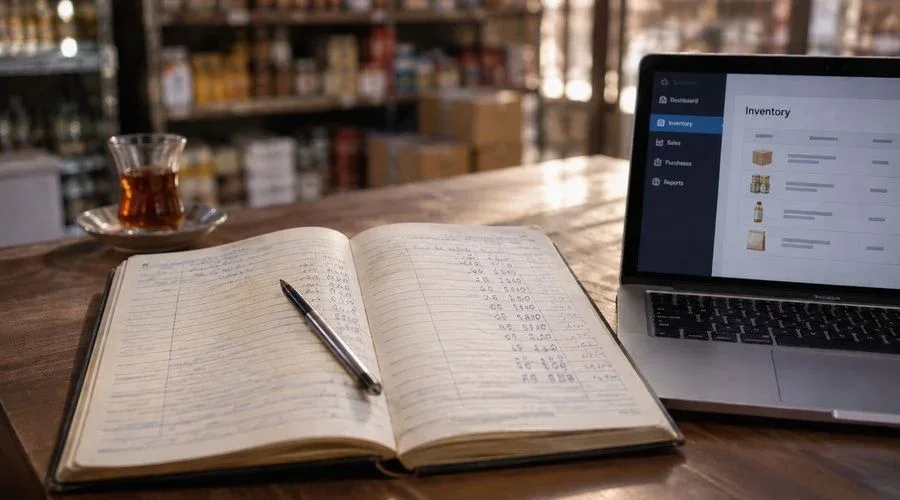
Walk into many small shops in Oman, and in parts of the UAE, Qatar, Kuwait and Bahrain too, and you will still see the notebook. A customer pays, and the sale goes on paper at that moment. Stock that arrives is written down: what came in, how much and when. At the end of the day, and again at the end of the month, someone goes through the pages and ticks everything off so nothing goes wrong.
What surprised me is how many of these same businesses have already bought software. They paid for an inventory system or a sales tool, and then they kept the notebook. The software sits there, used a little or not at all.
Across the Gulf, the money paid for a product doesn't necessarily translate into actual use. I think that gap is the real opportunity, and most of the market is looking past it.
Why paper keeps winning
Paper has three things going for it.
The first is simplicity. A pen and a page need no training.
The second is trust. What I write is right in front of me. I can see it, and I am the one who owns it.
The third is reliability. The notebook has one clear purpose. I open it, write down a purchase or a sale, and when I need something later, I flip a few pages and find it.
Software that wants to replace the notebook has to match all three. Being more powerful is not enough.
Two jobs, not one
Much of the software sold in the Gulf is sold the usual way: build a product, run the ads, close the deal. That gets the tool bought. Whether it gets used is another question.
From what I have seen, a company here has two jobs. One is product development. The other is building the culture and habit of use, which means helping people adapt. A product alone isn't enough, and many of the customers we work with had already tried similar products before us. What decided the outcome was implementation, observation and making the path to using the product easier.
Inventory is a good example. The steps from ordering to buying to entering stock to accounting for it are hard in most systems. When you cut that down to the fewest possible steps, even a shop worker with no training can use the tool and is happier using it.
What we learned by sitting in the shop
My co-founder, Omid Pirdehi, spent long stretches inside one customer's shop, almost like an employee, sometimes eight to 10 hours a day. He watched what happened and how. He looked at what was written on paper and at the WhatsApp notes the staff wrote to themselves.
He also got involved in the work. He taught the staff how to enter data, and he entered many of the products himself. That served three purposes. It showed the workers the tool was simple because they could watch and learn. It showed us what people actually need at the moment they enter data. Often, someone in the room raises a need they never thought to mention, and we never thought to ask about. And it showed us, firsthand, where the tool could be better.
Our test for every feature came from those days: Can the user walk this path easily, without extra cognitive load? If not, it waits.
This way of working, with an engineer placed inside the business, is old. It matters much more now that AI is here. An engineer can watch real behavior, design for exactly that behaviour, and if the solution works for other customers too, it gets built for everyone.
What software has to prove
To earn the place the notebook holds, software has to prove three things.
Entering information must be simple, whether through a dashboard or an AI chat.
The information must always be within reach, from a phone, a laptop or a tablet, through the dashboard or by asking the chat. That availability is what makes a system feel reliable.
And the data must come back exactly as it went in. When an owner enters a sale and later sees that same sale in a report, trust starts to form.
Trust is not something you can force on people. It takes time. Products that push sales with advertising rarely wait for it. Those that help build the culture, knowledge and trust over time get something more valuable than a sale. People come to trust the product, and then they become loyal to it. That loyalty builds slowly, and it is very hard for a competitor to buy.
Where AI starts to pay off
Once the data is right, something changes. Owners don't use AI every moment. They use it for decisions that would otherwise take more thinking or more clicks.
Here is the kind of question I mean. An owner is about to make a purchase and write a cheque, and asks the assistant what date to put on it. The assistant looks at past sales. If, for example, the 15th of each month is usually the biggest sales day, the 16th is a safer date because the money will be in the bank. No accountant had to run a report or even think of the question. The owner asked and got a key financial decision on the spot.
That only works if the sales were entered correctly in the first place, which brings everything back to trust.
For founders and investors
If you are building for small businesses in the Gulf, treat the notebook as your benchmark. Make entering data as simple as writing, keep it always within reach and show people their own numbers exactly as they entered them. Then give it time.
And when you judge a product in this market, look past how many businesses bought it. Ask how many still open the notebook.